Hemle or Gemini Notebook: which fits how you study?
Gemini Notebook is Google’s research notebook, called NotebookLM until July 2026. Hemle is an AI tutor for the chapter you’re studying. Here is what each does, from each company’s own pages, checked on 28 October 2026.
The short answer
Both read your files, answer questions from them, and make flashcards and quizzes. Gemini Notebook is the wider tool: many kinds of source in one notebook, audio and video overviews, free with a Google account. Hemle goes deeper on one chapter: it teaches it, names the page, and schedules your reviews.
Gemini Notebook suits you if
- You research across many sources at once: PDFs, web pages, YouTube videos, audio.
- You’d like to listen or watch: it turns your sources into audio and video overviews.
- You want it free with your Google account, with apps for Android and iPhone.
- You share notebooks with a group.
Hemle suits you if
- You’re learning a textbook chapter, slides or notes for a class or an exam.
- You want to be taught it one concept at a time, and checked as you go.
- You want answers, cards and questions that name the page they come from.
- You want each concept brought back for review before you’d forget it.
Hemle and Gemini Notebook, side by side
One row for each thing a student asks about. Hemle’s column is what Hemle does today; Gemini Notebook’s is what Google’s help pages say.
| Hemle | Gemini Notebook | |
|---|---|---|
| What you can add | PDF, Word, PowerPoint | PDF, Word, PowerPoint, Google Docs and Slides, web pages, YouTube, audio, images, ePub and more |
| How much it reads | One document at a time; up to 100 pages on the free trial | Up to 50 sources in a notebook on the free plan, each up to 500,000 words |
| Answers cite your file | Yes, with the page number; each page it names opens with a tap | Yes, citations that open the quote in your source; page numbers not stated |
| Teaches you the material | Malet teaches the chapter one concept at a time, checking your answers | A “Learning Guide” chat mode: “Best for educational content, helping you grasp new concepts and skills efficiently” |
| Flashcards and quizzes | Yes; quizzes in 7 formats, each question naming its page | Yes, easy to hard, with “Explain” and hints |
| Spaced repetition | Yes, per concept, set by your practice | Not stated; it remembers your progress and can repeat the cards you missed |
| Audio and video overviews | No | Yes; audio in 80+ languages |
| Free plan | A free trial, no card: your first chapter, up to 100 pages, and 50 messages to Malet or Chat, at most 20 a day | Yes, with a Google account: 100 notebooks of 50 sources each |
| Paid plans | Pro, $14.99 a month or $9.99 a week; Max, $44.99 a month | Higher limits with Google AI plans; Google AI Pro is $19.99 a month |
| Apps | Web, on a computer or a phone | Web, Android and iPhone |
| Trains AI on your files | No | No, unless you send feedback |
Checked on 28 October 2026 against Gemini Notebook’s own pages, listed under Sources. “Not stated” means those pages don’t say; Gemini Notebook may still do it.
Where Gemini Notebook does more
Many kinds of source
A notebook can hold web pages, YouTube videos, audio, images, Google Docs and ePub books beside your PDFs: up to 50 sources on the free plan, each up to 500,000 words. It can also find sources on the web for you, and Deep Research, for adults, browses hundreds of sites. Hemle takes PDF, Word and PowerPoint files, and Chat works on one at a time.
Listen, watch or map it
Audio Overviews turn your sources into a conversation between AI hosts, in more than 80 languages; Video Overviews, mind maps and reports, and for adults infographics and slide decks, show them other ways. Hemle has none of these.
Free, with phone apps
Anyone with a Google account can sign up free, and there are apps for Android and iPhone, rolling out country by country. Hemle’s free trial is one chapter, and it runs in your browser.
Built for sharing
You can share a notebook with others, and paid plans add more sharing controls. Hemle has no sharing: your library is yours alone.
Where Hemle is different
It teaches, not only answers
Malet, Hemle’s tutor, leads you through the chapter’s concepts in order: it explains one, asks you a question and checks your answer, in a session as long as the time you have. Gemini Notebook has a Learning Guide chat mode, which Google calls “Best for educational content, helping you grasp new concepts and skills efficiently”; its pages don’t describe lessons that go through your sources in order.
The page, in the answer
Gemini Notebook’s citations open the quote in your source; Google’s pages don’t say they name the page. Hemle puts the page number beside each point; tap a page like (p. 65) or a range like (pp. 72–73) and your chapter opens there.
Reviews on a schedule
Each concept you practise gets its own next review, before you’d forget it. Gemini Notebook remembers your flashcard progress and can repeat the cards you missed; its pages don’t mention scheduling reviews.
One question, asked of a real chapter
We asked Hemle’s Chat this about Lesson 1 of CDC’s Principles of Epidemiology, all 96 pages, on 27 October 2026. Beside the answer is page 72, the first page it cites, with the passage the app marked.
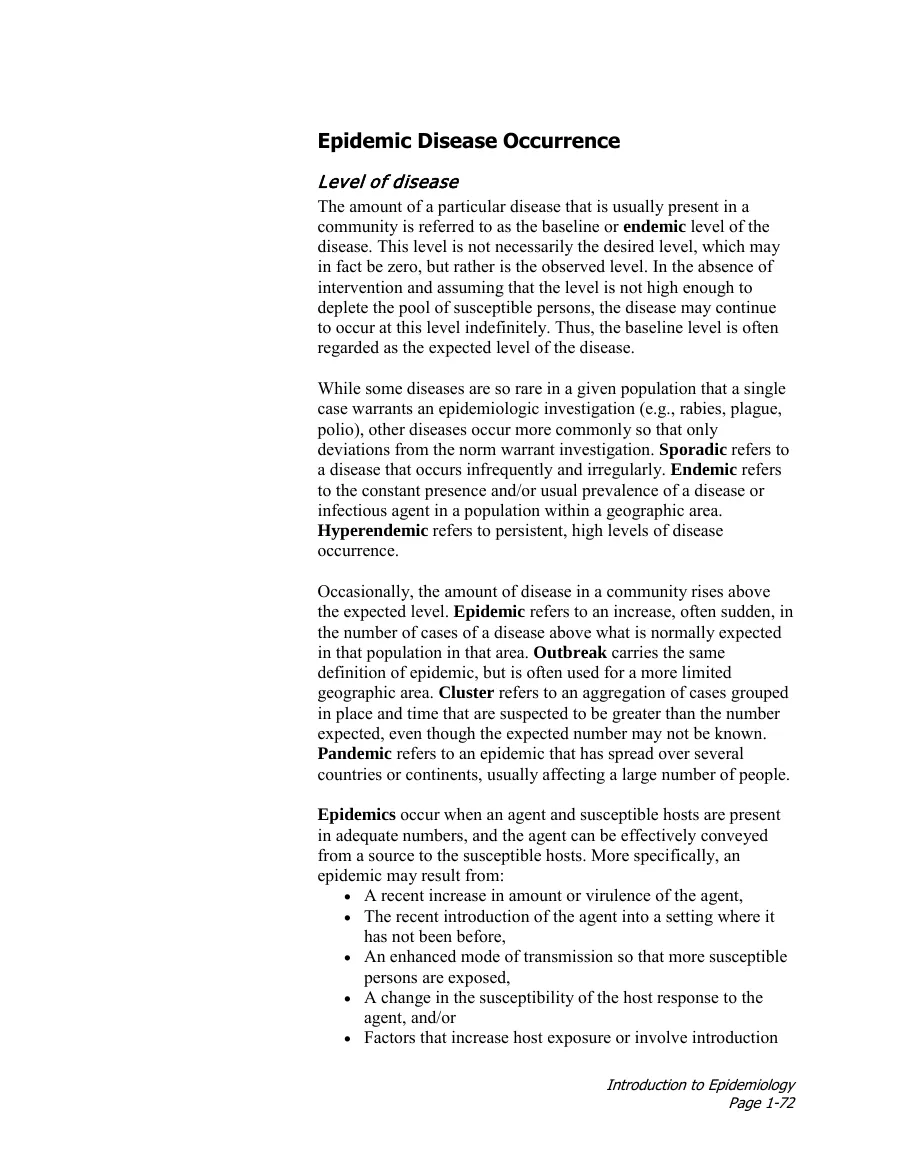
An epidemic is a rise in disease cases above what is normally expected in a particular population and area. A pandemic is an epidemic that has spread across several countries or continents, usually affecting many people (pp. 72–73).
| Term | What it describes |
|---|---|
| Epidemic | More cases than expected in a population in a particular area |
| Pandemic | An epidemic spread across several countries or continents, usually affecting a large number of people |
The key distinction is geographic spread: a pandemic is not a different kind of disease event, but an epidemic that has become much more widespread. The textbook’s exercise gives more than 20 million deaths from influenza worldwide in 1918–1919 as a situation to classify as a pandemic (p. 74).
These terms are useful because they help describe disease occurrence relative to what is normally expected and the area affected. They do not, by themselves, explain how the disease spreads or how severe it is. The evidence also does not give an exact numerical threshold for when an epidemic becomes a pandemic.
Does the part about epidemic make sense?
Answers are written by AI and can be wrong. Check the pages they cite.
How to try Hemle
Drop in your chapter
A PDF, Word file or PowerPoint deck, up to 20 MB. Until you have an account, it waits in your browser.
Make your account
Your first chapter is free, up to 100 pages, and you don’t need a card.
Learn it with Malet
Hemle maps the concepts your chapter teaches. Start a session with Malet, or go straight to Chat, flashcards or a quiz.
Common questions
Is Hemle an alternative to Gemini Notebook?
For learning one chapter, yes. Both answer questions from your files and make flashcards and quizzes. Hemle also teaches the chapter one concept at a time, names the page in its answers, and schedules your reviews. For research across many sources, or audio overviews, Gemini Notebook does more.
What’s the difference between Hemle and Gemini Notebook?
Gemini Notebook is a research notebook: it reads many kinds of source at once and turns them into answers, study guides, audio and video overviews, flashcards and quizzes. Hemle is a tutor for the chapter you’re studying: it teaches it, cites the page, quizzes you and brings each concept back before you’d forget it.
Does Gemini Notebook cite page numbers?
Its citations quote your source, and selecting one opens the quote in context. Google’s help pages don’t say whether a citation names the page. Hemle’s answers name the page, like (p. 65), and tapping any page they name opens your chapter there.
Does Gemini Notebook have spaced repetition?
Google’s help pages don’t mention it. Its flashcards remember your progress, and at the end you can go over only the cards you missed. Hemle schedules a review for each concept you practise, from how well you answered.
Is Gemini Notebook free?
Yes, with a Google account: up to 100 notebooks of 50 sources each, with limits on use that Google’s plans raise. Google AI Pro is $19.99 a month in the US.
Can I use both?
Yes. Some students research in Gemini Notebook and learn the chapter they’re tested on in Hemle. Your file in Hemle stays in your own library.
Is Hemle free?
Your first chapter is free, and you don’t need a card to start. Paid plans lift the limits when you want more.
Is my file private?
Your file stays in your own library, and it isn’t used to train AI. You can delete it, or your whole account, at any time.
Sources
What this page says about Gemini Notebook comes from Gemini Notebook’s own pages, read on 28 October 2026. What it says about Hemle is what Hemle does today.
- Google’s rename postThe new name, from 16 July 2026
- Learn about Gemini NotebookWhat it is, what it makes (study guides, mind maps), training on your files
- Add or discover new sourcesSource types and sizes, finding sources on the web, Deep Research
- Generate reportsReports
- Generate an InfographicInfographics, for adults
- Generate Slide DecksSlide decks, for adults
- Gemini Notebook’s plansFree sign-up, notebooks and sources per plan, sharing
- Use chat in Gemini NotebookCitations and the Learning Guide
- Generate flashcards or quizzesFlashcards, quizzes and progress
- Audio OverviewsAudio Overviews and their languages
- Video OverviewsVideos made from your sources
- The mobile appAndroid and iPhone apps
- Google AI plansGoogle AI Pro’s price
- Hemle’s pricingHemle’s plans and limits
- Hemle’s privacy policyHemle doesn’t train AI on your files
More from Hemle
Upload a textbook to AI
Ask your chapter anything; every answer names the pages it comes from.
PDF to flashcards
Flashcards from your chapter, each naming the page it came from.
Hemle vs StudyFetch
Lecture recording, exam-date plans and many formats beside a tutor for one chapter, from each company’s own pages.
The AI tutor
A real session on the same chapter: Hemle teaches it and cites the page as it goes.